When to Sell and When Not to?
- Hotcup

- May 21, 2020
- 3 min read
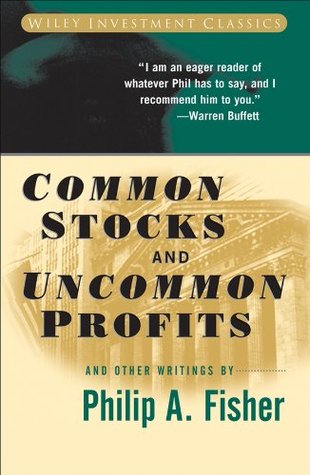
After sharing the Three No-no for Investors, I have decided to write more articles about this book (so many gems that I wanted to share with you all!!!). Today let's talk about when is the best time to sell a stock from the book "Common Stocks and Uncommon Profits" by Philip A. Fisher.

There are many reasons why an investor might decide to sell a stock. For me, I always get pretty excited when the stock that I owned has gone up (like 10%). When my stock has had a huge advance, I wanted to SELL IT SO MUCH and buy some other stock that hasn't gone up yet as I think the stock has probably used up most of its potential.
It is so ridiculous because why would I want to give up such a good stock (that's the reason I bought it in the first place).
So, when should we sell the stock?
The first reason for the sale of any stock is when a mistake has been made in the original purchase and it becomes increasingly clear that the particular company's background is, by a significant margin, less favorable than originally believed.
To handle such a mistake, we need to have emotional self-control as well as our ability to be honest with ourselves. Can you?
It is the ego in each of us that make the handling of investment mistakes so difficult. None of us like to admit that I have been wrong.
If we have made a mistake buying a stock but can sell the stock at a small profit, somehow we feel less foolish. On the other hand, if we sell at a small loss, we are unhappy about it. This reaction is completely normal and natural but it could also be probably one of the most dangerous behavior in the entire investment process.
Many investors tend to hold a stock that they really did not want as they think they could "at least come out even". BUT ultimately, more money has been lost.
Reason number two, sale of stock should always be made when there are changes resulting from the passage of time, no longer a worthwhile investment.
It explains why it is so important to keep updated with the affairs of companies whose shares are held.
Usually, when companies deteriorate, either there has been a deterioration of management, or the company no longer has the prospect of increasing the markets for its product in the way it formerly did.
There is a good test as to whether the companies no longer adequately qualify in regard to expected further growth. This is for the investors to ask themselves whether at the next peak of a business cycle, regardless of what may happen in the meantime, the company's earnings per share can be maintained or improved from the last known peak of general business activity.
If the answer is in the affirmative, the stock probably should be held. If in the negative, it should probably be sold.
For those who follow the right principles in making their purchases, the third reason why a stock might be sold seldom arises because of the fact that opportunities for attractive investment are extremely hard to find.
There is always a risk when you are selling a stock in the hope of switching these funds into a better one. If some major element has been misjudged, the investment probably will not turn out as anticipated.
In contrast, an alert investor who has held a good stock for some time usually gets to know its less desirable as well as its more desirable characteristics. Therefore, before selling a rather satisfactory holding in order to get a better one there is a need of the greatest care in trying to appraise accurately all elements of the situation.
If the job has been correctly done when a stock is purchased, the time to sell it is - almost never.


PS: Just a reminder, everything I shared in my blog is for investors, not speculators.
![[July 2021 Update] StashAway Simple is not that simple after all](https://static.wixstatic.com/media/d6c11b_9b1371a1676a464a836a040aea4a63d8~mv2.png/v1/fill/w_980,h_980,al_c,q_90,usm_0.66_1.00_0.01,enc_avif,quality_auto/d6c11b_9b1371a1676a464a836a040aea4a63d8~mv2.png)


Comments