Three No-no for Investors
- Hotcup

- May 20, 2020
- 3 min read
After reading it, I realize there are lots of jewels (no joke) in this book! I am going to share with you some of the important lessons that I learnt from "Common Stocks and Uncommon Profits" by Philip A. Fisher. One of the best investment books I've read and it is recommended by Warren Buffet.

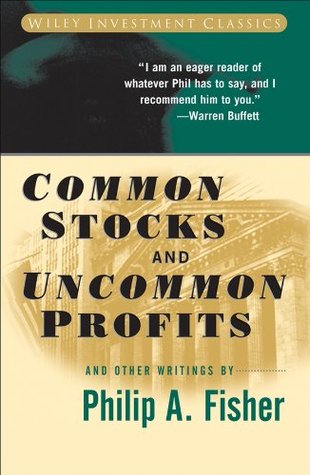
There are a few points highlighted by Fisher that really caught my eyes.
1. Don't quibble over eighths and quarters
I remember there was once, when I was entering a stock price, I always place a buy limit order and secretly hoping that share price would go down a little (10 or 20 cent) to meet my order price before it goes up again. I kept on waiting. BUT sometimes it never ever falls back the price that I wish to enter. Have you ever encountered this?
The problem is why would you want to save a few dollars that is insignificant compared to the profit that will be missed if the stock is not purchased?


Fisher says, for small investors, if the stock seems the right one and the price seems reasonably attractive at current levels, buy "at the market". If the stock does not have long-range potential, the investors should not have decided to buy it in the first place.
What is more important here is that you should have done your research on past financial performance and future growth before making any purchase.
2. Don't be influenced by what doesn't matter
For some reason, the first thing many investors want to see when they are considering buying a particular stock is a table giving the highest and lowest price at which that stock has sold in each of the past five or ten years (for me, I used to see past one year ooops). They go through a sort of mental mumbo-jumbo, and come up with a decision that YES I CAN BUY THIS STOCK woohoooo.


Is this illogical?
Because what does matter is whether enough improvement has taken place or is likely to take place in the future to justify higher price than those now prevailing.
Many investors including me give heavy weight to the earnings per share of the past five or ten years in trying to decide whether a stock should be bought. However, Fishers shared that what really counts is the knowledge of background conditions and an understanding of what probably will happen over the next several years is much more important.
Does all this mean that past earnings and price ranges should be completely ignored?
No. They are helpful as a tool to be used for specialized purposes but not major factors in deciding the attractiveness of a stock. Again, it must be kept in mind that it is the future and not the past which governs.


3. Don't assume that the high price at which a stock may be selling in relation to earnings is necessarily an indication that further growth in those earnings has largely been already discounted in the price.
In short, a stock with high price-earnings ratio does not mean that it is discounting its future earnings.
If a stock is selling at twice the price-earnings ratio of the Dow Jones averages and the management has just issued a forecast indicating it expects to double earnings in the next five years. Surprisingly, a number of investors would jump to false conclusion that the stock is overpriced as the stock is discounting future earnings ahead.
What is important here is thoroughly understanding the nature of the company, for example, if the company is consistently developing new products or services or new sources of earning power, the price-earnings ratio five or ten years in the future is rather sure to be above of the average stock as it is today.
That's the end of the article. Hope you learn something. I am going to share more about the key takeaways I learnt from this book. Stay tuned :)


PS: Just a reminder, everything I shared in my blog is for investors, not speculators.
![[July 2021 Update] StashAway Simple is not that simple after all](https://static.wixstatic.com/media/d6c11b_9b1371a1676a464a836a040aea4a63d8~mv2.png/v1/fill/w_980,h_980,al_c,q_90,usm_0.66_1.00_0.01,enc_avif,quality_auto/d6c11b_9b1371a1676a464a836a040aea4a63d8~mv2.png)


Comments