Fisher's Fifteen Points to Look for in a Stock (Part III)
- Hotcup

- May 31, 2020
- 3 min read
Updated: Jun 21, 2020
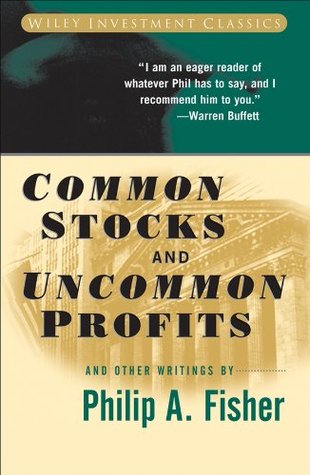
After Part I and Part II, let's continue to explore the final 5 interesting points from the book "Common Stock and Uncommon Profits" by Philip A. Fisher.

Point 11. Are there any other aspects of the business, somewhat peculiar to the industry involved, which will give the investor important clues as to how outstanding the company may be in relation to its competition?
Most of the business operation involving retailing, the degree of skills to handle real estate matters - the quality of its leases, insurance costs etc.
By checking to the mathematical ratios such as comparative leasing costs per dollar of sales, or whether insurance costs are lower than a competitor of the same size (same coverage), it gives a supplement but indicative check as to how outstanding a particular management may be.
This is because they are largely the reflection of over-all skill in handling people, inventory, and fixed assets (skills in handling insurance and real estate is totally different) so as to reduce the amount of accident, damage and waste and thereby make these lower costs possible.
Another matter would be a strong patent position which is a point of additional rather than basic strength for large companies.
However, influences such as manufacturing know-how, sales and service organization, customer good will, and knowledge of customer problems are depended on far more than patents to maintain a competitive position.
In fact, when large companies depend chiefly on patent protection for the maintenance of their profit margin, it is usually more a sign of investment weakness than strength.
Point 12. Does the company have a short-range or long-range outlook in regard to profits?
One of the ways is to see from the treatment of customers and vendors.
A company will at times pay above contract price to a vendor who has had unexpected expense in making delivery, because it wants to be sure of having a dependable source of needed raw materials or high-quality components available when the market has turned and supplies may be desperately needed.
Likewise, a company that will go to special trouble and expense to take care of the needs of a regular customer caught in an unexpected jam may show lower profits on the particular transaction, but far greater profits over the years.
Point 13. In the foreseeable future will the growth of the company require sufficient equity financing so that the larger number of shares then outstanding will largely cancel the existing shareholders' benefit from this anticipated growth?
Intelligent investor should not buy stocks simply because they are cheap but only if they give promise of major gain to him.
If equity financing will be occurring within several years of the time of stock purchase, and if this financing will leave shareholders with only a small increase in subsequent earnings per share, only one conclusion is justifiable.
This is that the company has a management with sufficient poor financial judgement to make the stock undesirable for worthwhile investment.
Point 14. Does the management talk freely to investors about its affairs when things are going well but "clam up" when troubles and disappointments occurs?
In any event, the investors will do well to exclude from investment any company that withholds or tries to hide bad news.
Point 15. Does the company have a management of unquestionable integrity?
Regardless of how high the rating may be in all other matters, however, if there is a serious question of the lack of a strong management sense of trusteeship for shareholders, the investor should never seriously consider participating in such an enterprise.
These are the fifteen points with which Fisher believes the investor should consider himself. Share with me your points to consider when buying a stock!


PS: Just a reminder, everything I shared in my blog is for investors, not speculators.
![[July 2021 Update] StashAway Simple is not that simple after all](https://static.wixstatic.com/media/d6c11b_9b1371a1676a464a836a040aea4a63d8~mv2.png/v1/fill/w_980,h_980,al_c,q_90,usm_0.66_1.00_0.01,enc_avif,quality_auto/d6c11b_9b1371a1676a464a836a040aea4a63d8~mv2.png)


Comments