Fisher's Fifteen Points to Look for in a Stock (Part I)
- Hotcup

- May 22, 2020
- 3 min read
Updated: Aug 8, 2021
I tend to look at the EPS, ROE, net profit margin, dividend yield, future growth etc when I was choosing the right stock to invest. However, Fisher has other opinions in selecting the company which has the attributes to be qualified as the worthwhile investment.
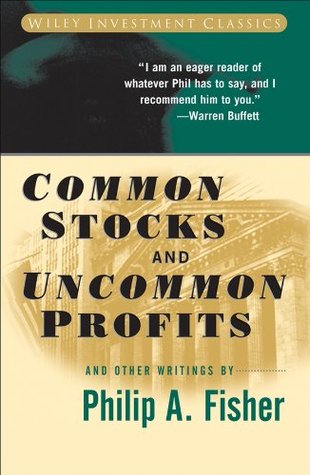
Yes, after sharing Three No-no for Investors and When to Sell and When Not to, I am going to show you what to look for in a stock from the book "Common Stock and Uncommon Profits" by Philip A. Fisher.

Point 1. Does the company have products or services with sufficient market potential to make possible a sizable increase in sales for at least several years?
Major sales growth should always be the first point to be considered. It is not about one-time profit that eagerly sought by many speculators. It is about correctly judging the long-range sales curve of a company.
You may be wondering that WE ARE NOT FORTUNETELLER to know whether future sales will be increased. We can't be so sure that it will happen, but rather it should be something that could easily happen.
Point 2. Does the management have a determination to continue to develop products or processes that will further increase total sales potentials when the growth potentials of currently attractive products lines have largely been exploited?
At first glance, Point 2 may appear to be a mere repetition of Point 1. This is not the case. Point 1 is a matter of fact, appraising the degree of potential sales growth that now exists for a company's products. Point 2 is a matter of management attitude.
Does the company now recognize that in time its present market potential would be fully grown up and that to continue to grow to develop further new markets at some future time?
It is the company that has both a good rating on both points that is likely to be the greatest investment interest.
Point 3. How effective are the company's research and development efforts in relation to its size?
It is only a matter of the simplest mathematics to divide research figure (stated in annual report) by total sales and so learnt the percent of each sales dollar that a company is devoting to this type of activity.
% of R&D over sales = R&D expense / Total sales
Sometimes, they compare it with the average of the industry, by averaging the figures of many similar companies.
Besides, in judging the relative investment value of a company research, market research is important as well as it may be regarded as the bridge between developmental research and sales. A good market research can lead the project to cater to a broader market that would pay out three times as well.
Outstanding production, sales and research may be considered the most important things for a company's success.
Point 4. Does the company have an above-average sales organization?
It is the making of repeat sales to satisfied customers that is the first benchmark of success. Yet, strange as it seems, the relative efficiency of a company's sales, advertising and distributive organizations receives far less attention from most investors.
However, of all the phases of a company's activity, none is easier to learn about from sources outside the company especially to know more about the efficiency of a sales organization. Ya, both competitors and customers know the answer. But, they seldom to express their views.
The time spent by the careful investor in inquiring into this subject is usually richly rewarded as a strong sales arm is vital for steady long-term growth.
Point 5. Does the company have a worthwhile profit margin?
The first step in examining profits is to study a company's profit margin not for a single year, but for a series of years.
So far, as older and larger companies are concerned, most of the really big investment gains have come from companies having relatively broad profit margin.
However, in regard to young companies, and occasionally older ones, there may be cases whereby such companies will at times deliberately elect to speed up growth by spending all or a very large part of the profits they have earned.
We have to ensure that the activities that caused the reducing of profit margin, is not merely for a good rate of growth, but actually represents even more research, sales promotion, etc.
For Part II, I will be sharing other interesting points highlighted by Fisher! Stay tuned!


PS: Just a reminder, everything I shared in my blog is for investors, not speculators.


Comments