Things to know about Liihen before you invest
- Hotcup

- May 16, 2020
- 6 min read
Updated: Sep 21, 2021
This is an updated post from the original article which was previously written back in May 2020. Liihen’s profit has dropped 30% in 1H 2021 compared to 1H 2020. What happened to Liihen? What are the reasons that affected its performance? Is now a good time to enter? Let's take a look on their latest performance for the first half of FY2021.
To be honest, I didn't expect myself to buy a furniture stock. However, it turns out Liihen is one of the best stocks I have analysed because of its strong financial performance. The return of this stock in my portfolio is currently around 12%.
Liihen is involved in the manufacturing and selling of furniture as well as rubber tree plantation. Based on annual report 2018, the main revenue contributor is the furniture division which supports the oversea market, especially to US and Canada, which made up 77% of total revenue.
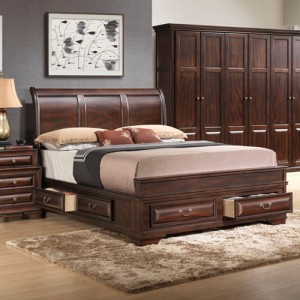
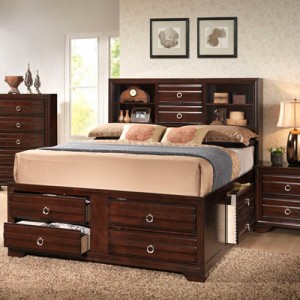
The traditional solid wood design of bedroom set below certainly looks attractive to me.




Upon research and reading up on Liihen, I have established several criteria to evaluate the Liihen group before deciding if I should invest my capital.
**Please note that 2019 figure below is unaudited figure.
1. Increasing earnings per share (EPS) over the past 10 years
My personal preference would be a quality stock with consistent growing EPS. Based on the historical financial information, Liihen has achieved a slow but consistent EPS growth rate (5%) over the past 10 years. Further there is a consistent PBT growth (18%) supported by the increasing revenue (14%).
Liihen has maintained its NPM at a range of 9% to 13% since 2014, which is comparably stronger than its competitors - Poh Huat Resources (9%) and Latitude Tree Holdings (4%).
In 2018, gross profit has fallen mainly due to forex depreciation of USD against RM, higher material and labour costs. The rise of labour cost continues to be the one of the main concerning issue for the manufacturing industry.
[Update Sept 2021]: Company profit has declined significantly in the first half of 2021 which is mainly caused by the decrease in gross profit margin from 19% (1H2020) to 15% (1H2021). Normally the 2 key reasons behind the decline in GPM pertain to either decrease in selling price or increase in the cost of materials. For Liihen case, the increasing labour cost and higher than-expected raw material cost have heavily affected the company’s gross profit margin despite the strong customer demand from US.
Not to mention, the shortage of containers has also resulted in unprecedented exorbitant fright rates globally. According to the Malaysian National Shippers’ Council, the shipping containers shortage is expected to persist till end of 2021.

2. Consistent and increasing operating cash flow
Cash is king. Liihen has an impressive operating cash flow growth rate of 40% over the past 10 years. Increasing cash flow denotes financial stability for a company, where operating income is actually generating consistent cash flow across the years. I am afraid cases where company is earning high income, but inability to generate and maintain sufficient positive operating cash flow to grow its operation.
[Update Sept 2021]: Cash flow has been negatively impacted by the higher operating costs and production disruption. I believe this is the main reason that no dividend was declared by the Board of Directors for Q2 2021.
The current liabilities coverage (cash flow from operation/current liabilities) is less than 1:1 which indicates the business is not generating enough cash for its immediate obligations and may cause a significant risk to the business. However, as the company has a low D/E ratio, it should be able to tap on its flexible line of credit to ride out current cashflow storm.

3. ROE (>12%) and ROA (>7%)
For my third criterion, I would be looking at high and consistent Return on Equity (ROE) and Return of Asset (ROA). The ideal ROE should be above 12%, and above 7% for ROA over the past 10 years. The average of Liihen's ROE is around 18% and ROA is around 13%.
[Update Sept 2021]: The extrapolated ROE in 2021 is lower as the Covid-19 outbreak in the factories has caused production disruption in the first half of 2021. We expect the earnings to be recovered in the next half of 2021 as the operation will be resumed with the transition to National Recovery Plan Phase 2.

4. Price per earnings ratio
Next, let's look at the price/earnings ratio (P/E). The current P/E ratio is 5.31, which is lower than the average historical record of 6.39. It denotes that the stock is currently not over-priced in comparison to its own average 10-year P/E ratio.
Further I have compared P/E with companies from same industry. Liihen's P/E is lower than the average P/E of its peers which is around 15.33, justifying that the current share price is not over-valued.
[Update Sept 2021]: Liihen’s P/E ratio (Sept 2021) is slightly lower compared to 2020, however it is still higher than the average 10-year P/E ratio. Its peers, Pohuat has a P/E at 6.62, Latitud at 5.5, Homeritz at 8.09 which indicates that Liihen is slightly overpriced with its current price of 3.11.

5. Debt over equity ratio
How about the debt of this group? The ideal D/E ratio is preferably below 0.5 and yes, Liihen has managed its liability well since it has an average D/E ratio of 0.44.
[Update Sept 2021]: Liihen did a great job in managing its liability during this critical moment as the D/E ratio stands at 0.28.

6. What is its competitive advantage and future outlook?
(i) Stronger demand from US
Malaysian furniture makers would be able to benefit from the US-China trade war, coupled with the potential depreciation of Malaysian Ringgit against US Dollar. This is especially true for a company like Liihen, since approx. 77% of its revenue was attributable from US.


However, the uncertainty on the fluctuation of foreign currency can pose a material impact on the company performance as well. The management has thus established a mechanism by using forward currency contracts to eliminate USD exposure on certain % of budgeted oversea sales.
(ii) Strong management team
I have to say the team has been doing very well for the past 10 years. Their business has been consistently growing in terms of revenue as well as increasing cash flow to support the operations.
The company is a homegrown family business, where Mr. Chua Lee Seng (co-founder) remained in the BOD as an executive director, providing insight and valuable experience to the management team. His nephew, Mr. Chua Yong Haup also having more than 30 years' experience in the industry, serves as the Managing Director of the group.
Average tenure period of the veteran management team is above 10 years and they hold on to a substantial amount of the company's shares, hence management goal is likely to be in tandem with shareholders' interest.
(iii) Future outlook
In order to cater for future expansion, three pieces of freehold lands in Muar were acquired for RM7.8mil on Mar'18. Besides, Liihen has been looking for automation opportunities to reduce reliance on low-skilled labour. The increasing cash flow and strong cash balance will be able to fund these upgrade and development projects for its organic growth.
On the downside due to the recent Covid-19 pandemic, unemployment rate rose to 14.7% in US and hence disposal income is certainly to decrease. In FY2020, it is likely that revenue from the US market will decline significantly since furniture product by nature is a non-essential good. However since my investment horizon is at least 5 years, I believe it will be back on track once the market recover.


[Update Sept 2021]: The new norm of work from home has resulted in the rise of demand in home office furniture. If there is no further production disruption, Liihen’s earnings will improve in the subsequent quarters, which is supported by the strong demand from US customers. This is mainly due to the diversion of orders from China to SEA region because of the trade war.
7. Share price trend
Now let's look at the chart below. The stock price has been declining since early 2018, as an impact of foreign investors selling their shares in the overall Malaysia market. This was due to the political turmoil prior to the 2018 election between UMNO and Pakatan Harapan. Later in Feb'20, the outbreak of Covid-19 in Malaysia has resulted in another downturn. Currently share price has entered an uptrend recovery stage, which could be an excellent opportunity to stock up this share.


8. Conclusion: To buy or not to buy?
[Update Sept 2021]: Despite the performance is weaker in the first half of 2021, we expect company earnings to improve in the subsequent quarters as factories will be reopened and strong furniture sales from US customers. However, the elevated raw material price and the persistent labour shortage are still the biggest challenges faced by Liihen.
As a long-term shareholder, I will stick with Liihen in this critical moment as I believe the operational shut down is only temporary and its fundamentals should stay unwavering.
Despite the risk on escalating labour cost and unstable forex, this stock valuation is quite attractive with the strong financial performance over the years. In addition, this company has never failed to pay shareholders dividends for the past 10 years.
As a value investor, I would prefer to enter when the stock falls below its intrinsic value:
a) Fair value (include 33% margin of safety) = RM2.14
b) Discounted cash flow = RM10.63
c) Based on Earning method = RM1.24
*Intrinsic value is calculated based on my personal valuation
Feel free to share with me your opinion below :)
Disclaimer: I am neither an expert nor certified trader, and the views contained in this post should not be taken as an indication to buy or sell. I will not be held liable for any gains or losses incurred as a result of one's individual investing decisions after reading this post.




Comments